


Table Of Contents
How to Do a Reverse Phone Lookup — The Complete Guide
 Detectico Team
 Skilled techies mastering location data.
We’re guessing you’re as introverted as us and can’t stand getting calls from unknown numbers. You know those familiar situations – you’re having a quiet dinner or already going to bed (or even sleeping at 7 a.m. on your day off) and suddenly you get a call from an unknown number. Do you pick it up? Maybe it’s something important, like the school nurse, a delivery driver, or that job offer you’ve been hoping for. But let’s be real – it’s probably a scammer pitching an extended car warranty.
When you’re dealing with unknown calls, reverse phone lookup services can be a lifesaver. They make it easy to figure out who’s calling, so you can stop guessing and get some peace of mind. In this guide, we’ll show you how to use Detectico to find out who’s behind those mystery numbers.
What Is A Reverse Phone Lookup and Why People Use It
A reverse phone lookup is a tool that identifies the person associated with a phone number, essentially flipping the script of old-school phone books. But modern services like Detectico can give you a much bigger picture of who’s calling.
People usually turn to these tools for a few reasons – safety (like parents making sure they know who’s contacting their kid), sanity (blocking those annoying spam calls), or reconnection (figuring out if that mystery number belongs to an old friend). It’s a simple idea powered by smart tech, connecting random numbers to real people.
What You Need to Do to Check a Phone Number on Detectico
One of the reasons we recommend Detectico is that it doesn’t require you to be a tech wizard. You don’t need to download an app from the App Store or Google Play. You don’t need to install software on your computer. It is entirely web-based.
This means you can perform a lookup from your iPhone, your Android, your laptop, or even a tablet. As long as you have an internet connection, you are good to go.
Here is the straightforward process to get your results.
Step 1: Enter the Phone Number
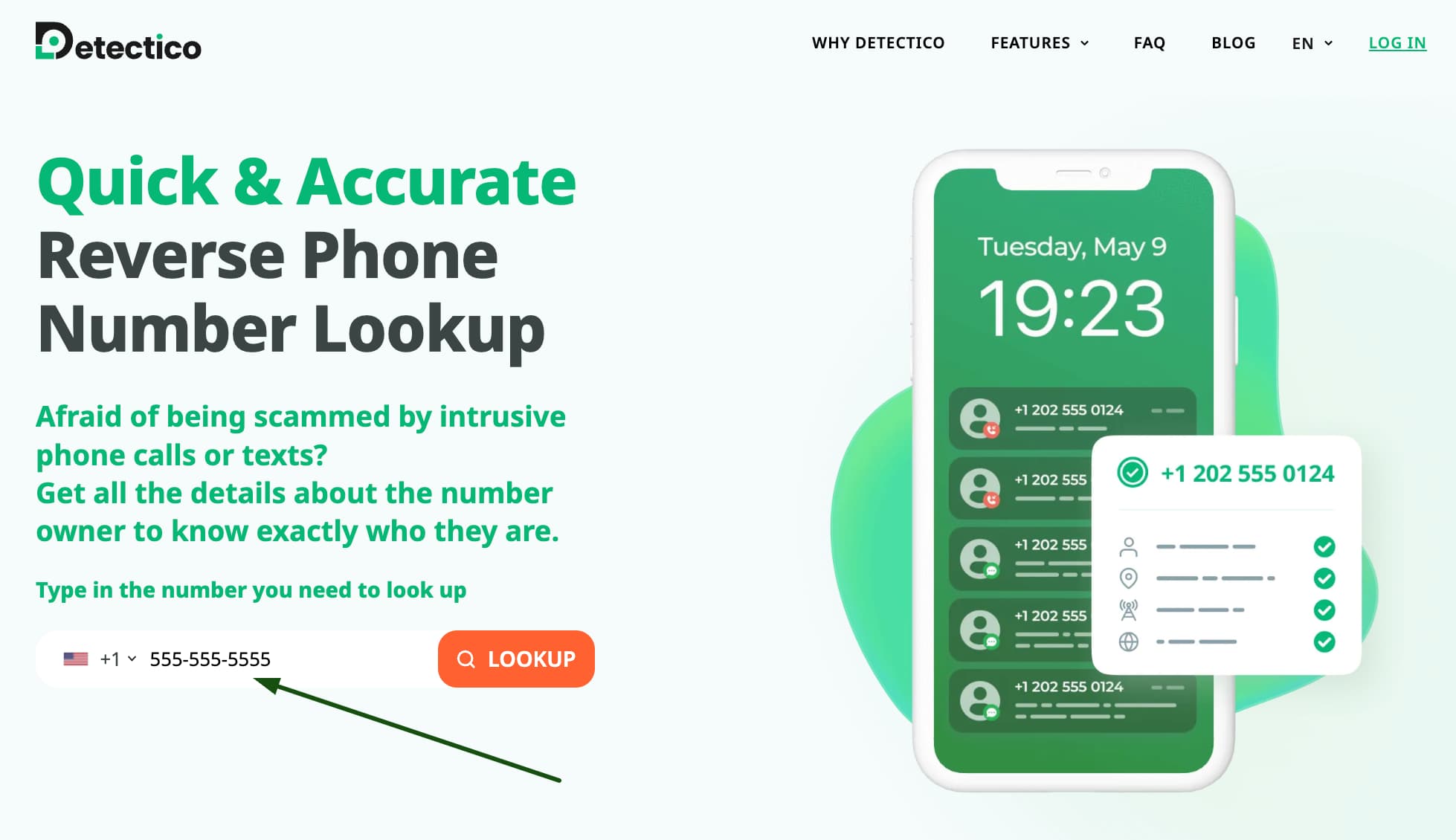
Navigate to the Detectico website. On the homepage, you will see a prominent search bar. This is your starting point.
To learn how to look up a phone number with Detectico, start by typing the number you want to investigate into this field. Make sure you include the correct area code. If it’s an international number, ensure the country code is correct. Detectico works globally, but accuracy in this step is vital for the system to know which registry to query.
Step 2: Start the Search
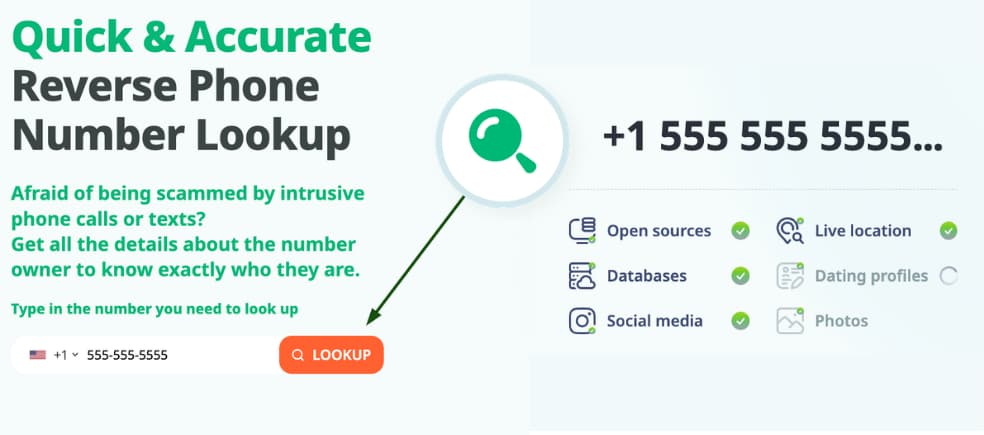
Enter the number and hit the button to get started. If you haven’t chosen a plan yet, you might be prompted to pick one now. Detectico works on a paid model to access premium databases, but they usually offer a 1-day trial for just $0.89. It’s a great option if you only need to check one or two numbers without committing to a subscription.
Once your account is set up, the system does the rest. No need to mess around with settings or filters – the algorithms handle everything for you.
Step 3: Review the Results
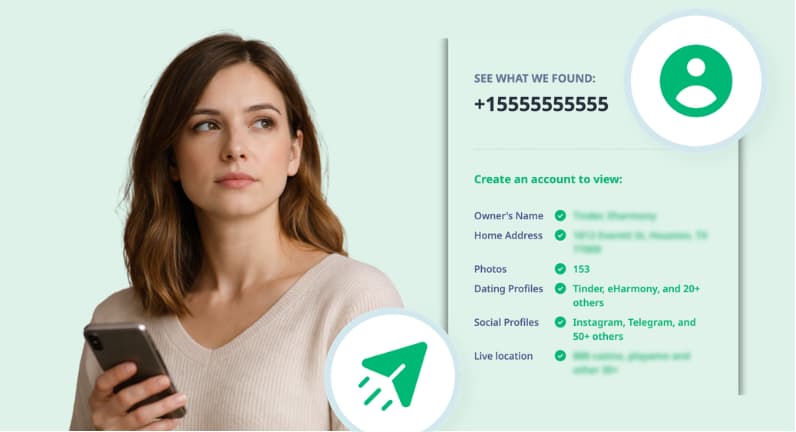
After the search is complete, Detectico will present you with a report.
This isn’t just a “yes” or “no” result. The dashboard will display whatever information was found linked to that number. This typically appears in your “Search History” or results panel.
You might see:
- The full name of the owner.
- The mobile carrier (e.g., Verizon, T-Mobile, Vodafone).
- Potential address history.
- A spam score indicating if the number is known for fraud.
If the information looks correct, you now have what you need to make a decision. You can call them back, block them, or simply ignore them with peace of mind.
How Does Reverse Phone Lookup Work: What Happens Behind the Scenes
To the user, it looks like magic. You type a number, wait a few moments, and a name pops up. But as security experts, we can tell you there is a lot of complex data handling happening in those few seconds.
How Detectico Reads the Phone Number
When you hit “search,” the system first checks if the number’s format is valid.
It then breaks the number into three parts: the country code, the area code, and the subscriber number. This tells the system where to look for the number geographically.
For example, the area code might point to New York, while the next three digits identify a specific exchange. This helps the system figure out which carrier first issued the number.
How Detectico Analyzes Signals
Once the number is parsed, Detectico queries multiple databases simultaneously.
It doesn’t just look at one list. It cross-references public records, carrier data, and proprietary databases. It looks for digital footprints associated with that sequence of numbers.
The system is looking for matches in:
- Public Records: Utility bills, property records, or court documents where a phone number is listed as contact info.
- Social Media: Profiles on platforms like Facebook or LinkedIn where users have voluntarily linked their mobile numbers.
- Marketing Lists: Data from online registrations or sweepstakes where people have inputted their contact details.
How Results Are Assembled
Data is rarely clean. One database might list the owner as “W. Byers,” while another lists “Winona Byers.” One might have an old address, and another has a new one.
Detectico’s algorithms work to aggregate this data. It filters out obvious errors and attempts to present the most current and likely identity.
That’s why you might notice a “spam score” pop up. The system checks the number against blacklists of robocallers and scammers. If it’s on those lists, it’ll flag the number to warn you – answering it could mean dealing with a scam.
For those wondering, “is reverse phone lookup safe?” Detectico ensures that it is, with real-time checks and reliable data handling. All of this happens in moments, delivering a concise report directly to your screen.
Reverse Phone Lookup Alternatives and Their Limitations
While Detectico is a great tool, you might be wondering if there are any free ways to track a phone’s location. The short answer is yes, but it’s not always straightforward.
If you’re trying to avoid paying for a premium service, you can try a few other methods first. Just remember that “free” often comes at the cost of your time or accuracy.
1. Google Search
You can type the number into Google (put it in quotes, like “555-0199”).
This usually only works for businesses. If a plumber calls you, their number is likely on their website. If it’s a personal cell phone, Google probably won’t show you anything other than a generic page saying “This is a number from Texas.”
2. Social Media Search
Try entering the number into the search bar of Facebook or Instagram.
This relies on the user having their profile set to “Public” and allowing lookup by phone number. Most privacy-conscious users disabled this feature years ago.
3. The “Call Back” Method
You can dial *67 (in the US) to hide your caller ID and call the number back.
This is risky. If it is a scammer, you have just confirmed your line is active, which guarantees you will get more spam calls. If it’s a real person, it can be an awkward conversation.
Why Reverse Phone Lookup Results Are Not Always Complete
We value transparency, so let’s be real: no reverse phone lookup tool is 100% perfect, 100% of the time. Sometimes you will run a search on Detectico, and the result might be sparse. Maybe it only shows the carrier and the city, but not the name. Why does this happen?
- If someone buys a prepaid phone with cash at a convenience store and never registers it online, there is no digital paper trail. There is simply no name in any database to find.
- If a number was issued yesterday, records might not be updated yet. Databases can take time to sync.
- Voice over IP numbers (like Google Voice or Skype) are easy to generate and discard. They aren’t tied to a physical SIM card or a billing address in the same way a traditional mobile contract is. Scammers love these for this exact reason.
- Some privacy-conscious individuals pay services to scrub their personal information from data brokers. If the owner has actively removed their data, Detectico won’t be able to display it.
Getting a “No Result” or incomplete report doesn’t mean our tool is on the fritz. It usually just means the owner of that number has done a really good job of staying off the grid, or the number is a temporary one used for spam.
Is Reverse Phone Lookup Safe and Private?
This is the most common question we get from users. “If I look up this number, will they know?” The short answer is: no, they will not know.
When you use a service like Detectico for a reverse phone lookup, the search is completely anonymous. The person on the other end does not receive a notification. They don’t get a text saying, “John checked your number.”
On your end, Detectico uses encryption to protect your account details. Your search history is yours.
When Reverse Phone Lookup Can Help — and When It Has Limits
To wrap this up, let’s look at practical scenarios. When is this the right tool for the job?
Scenario A: The Late-Night Text
Your partner gets a late-night text from a number you don’t recognize. Before you jump to conclusions, a quick reverse phone lookup shows it’s just their boss with a new work phone. Phew, crisis averted.
Scenario B: The Cyberbullying Incident
Say your child is getting nasty messages from an unknown number. You try to look it up, but since the number comes from a texting app, the only information you get is the carrier, like “Bandwidth.com.”
The Verdict: The lookup didn’t give a name, but it confirmed it’s a burner number, which is useful evidence if you need to involve school authorities.
Scenario C: The Online Marketplace Buyer
Imagine you’re selling a couch on Craigslist. A buyer finally texts you about it. You do a quick search on their name, and surprise – it’s the same person you’ve been emailing back and forth with.
The Verdict: This builds trust that you are dealing with a real person and not a bot.
Scenario D: The “IRS” Call
Let’s say you get a voicemail claiming you owe taxes. You’re suspicious, so you look up the number. Turns out, it has a high “spam score” and is linked to a different country.
The Verdict: It’s a scam. You block it immediately.
Take Control of Your Digital Safety
We live in an era where our phones are our lifelines, but they are also open doors for interruptions and risks. You don’t have to let unknown numbers dictate your day or threaten your family’s safety.
Detectico offers a user-friendly, private, and effective reverse phone lookup tool to pull back the curtain on those mystery calls. It turns a moment of uncertainty into a moment of clarity.
Whether you are dodging scams, protecting your kids, or just trying to figure out who called, the power to know is just a click away.
Detectico Team Skilled techies mastering location data.
Related posts
-
 February 9, 2026
 -
 December 30, 2025
 -
 December 10, 2025